The 8th House: The Shadow Within
The 8th House: The Shadow Within – A Journey into the Hidden Self "The greatest battle in life is not against...
Gemstones and their relation with destiny have remained fascinating among all cultures throughout history. Beyond their physical beauty, ancient societies considered them as containers of celestial energies from the universe. They relied on them for healing properties, protective talismans, and representation of divine power. The historical significance of gemstones stretches back thousands of years, not only for beauty and rarity but also carrying deep cultural and symbolic meaning across civilizations.
Most of the time, gemstones were used in religious rituals and as talismans for protection and power. These precious stones have not only adorned the crowns of kings and necks of authoritative figures but have also been integral to the rituals and traditions of many societies. This makes the historical importance of gemstones a fascinating study of human values, beliefs, and their connection to divine and celestial energies.
This inspires curiosity about why all ancient cultures around the world share this common archetype to relate gemstones with destiny, healing, and their connection with celestial energies. Were they based upon observations that led to conclusions about divine properties of these precious stones? Or is it just a superstitious belief? Whatever the reason, the answer lies in the unique properties of gemstones — their unique visible appearance, color, brilliance, and reflection of light. This inspired our ancestors to connect them with celestial energies. We will try to understand this in more detail in this blog.
We will also explore what made our ancient astrologers around the world expand this wisdom further and use these precious stones to strengthen planets or use them for remedy purposes. They were able to connect specific gemstones with the frequency of planets, such as:
Throughout history, gemstones and crystals have been revered for their beauty, symbolism, and mystical powers. They were highly valued by ancient civilizations, including Ancient India, China, Greeks, Romans, Egypt, Mesopotamians, Celts, and Vikings. We will further explore how these civilizations incorporated gemstones and crystals into their cultural practices.
In Mesopotamia, many centuries back, gemstones were used by the Mesopotamians for their magical formulas. They believed that when carved into talismans, people could communicate with divine energies, which also means they thought there were vibrations of gemstones that could be tuned with supreme energies. The crystal most found and used within this time was Lapis Lazuli, which was highly valued for its deep blue color. Amazonite was made into talismans for protection and was called the stone of truth and stone of courage. They also highly used stones like Carnelian and Jasper stones.
Not only for ritualistic and medical purposes, but gemstones and crystals were also linked by Mesopotamian astrologers with specific planets, seeking to harness the perceived power and alignment of stars:
Rather than being worn on rings as standard everyday jewelry, these gemstones were primarily utilized as talismans and amulets. Astrologers and nobles often used stones like Lapis Lazuli and Agate to carve zodiac and planetary symbols, which were believed to grant prophetic abilities and protection against negative energies. Priests and buyers sought the advice of astrologers to select the correct stone, believed to hold divine energies before carving or wearing them to favorably influence planetary energy.
The Babylonians were among the first civilizations to link gemstones with planets and zodiac signs. Astrologers advised citizens to carry specific stones to channel the energies of planets. Babylonian astronomers were among the greatest in the ancient world. They observed and tracked the movements of luminous planets — Sun, Moon, and the five visible planets: Mercury, Mars, Jupiter, Venus, and Saturn. From their deep research and observation of these planets, they found a very profound system of astrology and became one of the first in the world to develop the planets-gemstones system. They understood that specific gemstones carry the energetic frequencies of specific planets and that these stones can resonate with beneficial planetary energies.
This was the greatest discovery for the astrological world and gave a new perspective to various systems of astrology around the world. It helped them to expand this wisdom to remedy methods, especially for Indian astrologers who mostly depended upon spiritual and ritualistic methods to remedy planets.
Sun: Citrine and golden stones (Yellow Jasper, Yellow Agate, Amber). The Sun was associated with Shamash, Lord of Justice and Truth. It was believed he rode in a fiery chariot across the sky each day and traveled under the world at night. The Sun was considered a significator for confidence, clarity of mind, authority, leadership, and one's own power. To boost these significants, astrologers used to recommend Citrine, Amber, and Golden Tiger's Eye for confidence and to reconnect with personal power and purpose.
Moon: Moonstones, Selenite, Silver, and White Translucent stones. The Moon was associated with Nanna, Lord of Wisdom. He governed the lunar cycles and the rising waters. The Moon was considered a significator of intuition, emotions, dreams, and hormonal changes. To balance all these significators, moonstones and selenite were recommended.
Mercury: Banded Agate, Carnelian, Fluorite stones. Mercury was associated with Nabu, God of Literacy, Wisdom, Writing, Scribes, Rational Arts, and Prophecy. To enhance communication skills and sustain intellectual focus, these stones were recommended.
Venus: Lapis Lazuli and Green stones. Venus was associated with Ishtar, Goddess of Love, Creativity, Beauty, Sex, Fertility, and War. To enhance self-love, creativity, attraction, love, beauty, and heart healing, Lapis Lazuli and Rose Quartz were suggested.
Mars: Red Jasper and other Red stones. Mars was associated with Nergal, Lord of War, Courage, and Vital Force. Mars stones governed physical strength and will to act. They were prescribed for physical weakness, fear, loss of will, and depletion after sustained effort.
Jupiter: Turquoise and Blue stones. Jupiter was associated with Marduk, Supreme Deity and Lord of Abundance. Jupiter stones rule wisdom, good fortune, and expansion. They were prescribed for lack of abundance, poor judgment, and negative thinking that prevents growth.
Saturn: Obsidian, Black Tourmaline, and Black Onyx. Saturn was associated with Ninurta, Lord of Time, Harvest, and Hunting. Saturn was also known as Kayyamunu to reflect its slow, constant path across the night sky. Saturn governed discipline, protection, psychic disorder, and deep wisdom of confronting limitation. It was prescribed for lack of discipline, inability to maintain boundaries, and scattered energies.
The Babylonian planet-stone system is the foundation of Western birthstone tradition, medieval planetary talismans, and modern crystal healing methods. When a healer recommends Citrine for Sun or Lapis Lazuli for Venus to enhance sexual energy, they are applying Babylonian wisdom transmitted across thousands of years. The planets are still moving. The stones are still carrying their planetary vibrations. Modern astrologers are still keeping this heritage from the Babylonians.
Gemstones have always held a special place in India's culture. From the Vedic period to the modern era, the saga of Ratnas (gemstones) is a legacy of beauty, power, and tradition that continues to captivate the world even today.
The Vedas and Puranas contain mentions of gemstones. In Garuda Purana, Chapter 68 (Agastya Samhita), Rishi Agastya mentioned Padmaraga (Ruby), Marakata (Emerald), Indranila (Blue Sapphire), Vaidurya (Cat's Eye), Pushpraga (Yellow Sapphire), Mukta (Pearl), Vajra (Diamond), Gomeda (Cat's Eye), and Vidruma (Red Coral). Another shloka from the same chapter states that some of these stones eradicate sins, can be used to cure snake bites and diseases, while others are for virtues. So it is clear that gems possess mystic powers and people of that time used to wear these kinds of stones for the betterment of their lives.
The Atharva Veda has more references to gemstones as auspicious objects with powerful energies. One of the most direct mentions comes from Khand 19, Sukt 6, which states that gemstones are auspicious and possess multifaceted vital powers that aid in various phases of life. They are full of energy, endowed with radiance, have powerful effects, and bring sweet results.
The Vedas themselves mention using gemstones for increasing strength and vigor. The Atharva Veda has many suktas dedicated to gemstones and gem therapy. Khand 19 Sukta 46 says: "O man, Prajapatih the master of household binds on you this invincible stone at first for might and vigor. I the physician bind on you for long life, splendor, energy and strength. Let this invincible one protect you."
Atharva Veda Khand 8 Sukta 5 says: "This mani is the sign of killing enemies, this is a mark of good heroism, this is the sign of victory, this is the sign of strength, conquest and might. Let this succeed ruining the enemies. The king decorated with this mani destroys the assailant, the enlightened statesman decorated with it inflicts defeats to anti-social and anti-national elements. Decorated with this, the king becomes victorious over earth and heaven both; he maintains with this his supremacy in four regions."
In the ancient medical practice of Ayurveda, gemstones were widely used as therapeutic tools to restore vitality, balance energies, and restore mental and physical health. Practitioners believe these stones emit vibrational frequencies that pacify doshas (Vata, Pitta, Kapha). Healing is done by consuming them as specially prepared mineral ashes (Bhasma), and this method is still practiced in the modern period by Ayurvedic practitioners due to its positive effects on patients, which they have witnessed for thousands of years.
Gemstones are selected based upon their thermal and elemental properties to counter an individual's constitutional imbalances:
Vata (Air/Ether): Vata governs movement and air. It can easily become restless, causing anxiety and dryness. Balancing it requires calming stones like Amethyst to balance the nervous system, calm an overactive mind, and relieve stress. Garnet and Ruby possess heating energetics, which counteract the naturally cold and airy nature of Vata.
Kapha (Earth/Water): Gemstones are used to balance the heavy and wet qualities of Kapha by introducing warming, stimulating, and purifying energies. They are typically ingested as carefully purified ash (Bhasma). Ruby stones stimulate circulation, improve digestion, and add warmth to combat Kapha-induced sluggishness and cold. Blue Sapphire, Hessonite, and Carnelian can also be used to treat Kapha.
Pitta (Fire/Water): Pitta dosha is characterized by fire and water elements, responsible for digestion, metabolism, and transformation. When Pitta gets out of balance, the body can become overheated with excess stomach acid, interrupted sleep, and occasional skin breakouts. Recommended gemstones to balance Pitta include Moonstone, Pearl, and Aquamarine.
So we can see how wisely Indian Ayurvedic practitioners from the ancient period decoded wisdom from the Atharva Veda and Garuda Purana and wisely used gemstones for medicinal properties. These techniques of using gemstones in Ayurveda to balance doshas were totally based on using chemical and temperament properties of gemstones to manage the doshas. For example, in the case of Pearl, which is highly cooling in nature, it was used to improve skin irritations caused by Pitta imbalance.
In Garuda Purana, there is mention of nine gemstones: Ruby, Pearl, Red Coral, Emerald, Yellow Sapphire, Diamond, Blue Sapphire, Hessonite, and Cat's Eye. These are codified in the Garuda Purana as a set of stones associated with the nine planetary influences of Vedic astrology. The set includes:
The Navaratnas is more than just a list. The Garuda Purana and related texts prescribed the placement of stones in a specific configuration when set together: the Ruby in the center representing the Sun, with the other eight stones arranged in a fixed pattern around it. A Navaratna ring or pendant set in this configuration is regarded in the tradition as channeling balanced planetary influence regardless of the wearer's specific natal chart.
But in the tradition we follow, we have been taught to be very careful when recommending gemstones to individuals. Navaratnas have such intense energy from all planets that they can destroy or make a person insane if their natal chart indicates not to wear them. The same can be true for single gemstones. We have seen in various cultures that gemstones can be given to any individual to enhance particular significances of planets and to channelize the energy of a planet with a gemstone so that the significance of such a planet will also rise up in the individual. This is especially true in the Babylonian tradition. In Western astrology, they prefer to wear gemstones with respect to the month the native is born, as they consider gemstones for each month. Such methods have been followed in all systems of astrology like Mesopotamia, Greek, Babylonian, and Chinese — but not in the traditional Indian astrology system.
Great Rishi Parashara introduced the house-based astrological system thousands of years ago in ancient India. This system states that planets have a functional nature of being malefic or benefic in a birth chart, which depends upon which ascendant the native is born under, based on their time and place of birth. There are twelve different ascendants, and a native can be born under any of these twelve. Based upon the ascendant in the birth chart, planets acquire functional natures and significances. So we cannot give strength to planets that have acquired a malefic nature. Such planets, if they become powerful, can ruin the life of the native.
So, as per the traditional Indian system of astrology, the practitioner has to be very careful while recommending gemstones to an individual and should decide very wisely which planets should be given strength. Only after proper analysis of the birth chart should a gemstone be recommended. In the Indian astrology system, purification and energizing of gemstones are mandatory to make them more effective, which is done by mantra chanting and some rituals. The day and time when to wear a gemstone should also be considered, which we call the right muhurta to initiate any work. So all these factors are necessary when considering which gemstone to wear and what time and day it should be worn.
For gemstone recommendations, you need to consult a professional practitioner of astrology. But such factors can only be considered if you consult an astrologer who practices Indian traditional astrology. However, there is one more school of thought in this astrology system which says that for any planet, the native should be recommended to wear a gemstone even if that planet is malefic in the native's birth chart. If a planet is causing trouble in the chart due to its acquired malefic nature because of its lordship in the native's horoscope, a gemstone for such a planet should be recommended to pacify it.
Let us take the example of Virgo ascendant. In this ascendant, Mars would be lord of the 3rd and 8th houses, and people with some basic astrology knowledge must know these are bad houses in the horoscope. If this same Mars is placed in the Lagna (1st house), it will cause a lot of obstruction in the native's life by giving health issues and making him more susceptible to aggression. Now if we give a gemstone of Mars (Red Coral) to such a native, it will give more power and strength to the native who wears it. So imagine the same Mars, which is already creating many problems for that individual, and now we have given that Mars more power through its gemstone — how damaging it would be for the native! So we cannot give power to any planet in a horoscope and need to be very careful while recommending a gemstone to anyone.
In conclusion, we can say that almost every old culture of this world was so fascinated with gemstones and connected them with divine energy. When the astrology system got developed, they connected gemstones with the divine energy of planets. But the great rishis of ancient India were the ones who did deep research with gemstones and found out how to resonate their energies with planets using the right muhurta, rituals, and methods to energize them. They also came to the conclusion that we cannot recommend gemstones for any planet. Only by deeply studying and analyzing the birth horoscope should a gemstone be chosen very carefully. This is the great contribution and gift to the whole world from the Indian astrology system.
Gemstones and their relation with destiny have remained fascinating among all cultures throughout history. Beyond their physical beauty, ancient societies considered them as containers of celestial energies from the universe. They relied on them for healing properties, protective talismans, and representation of divine power. The historical significance of gemstones stretches back thousands of years, not only for beauty and rarity but also carrying deep cultural and symbolic meaning across civilizations.
Most of the time, gemstones were used in religious rituals and as talismans for protection and power. These precious stones have not only adorned the crowns of kings and necks of authoritative figures but have also been integral to the rituals and traditions of many societies. This makes the historical importance of gemstones a fascinating study of human values, beliefs, and their connection to divine and celestial energies.
This inspires curiosity about why all ancient cultures around the world share this common archetype to relate gemstones with destiny, healing, and their connection with celestial energies. Were they based upon observations that led to conclusions about divine properties of these precious stones? Or is it just a superstitious belief? Whatever the reason, the answer lies in the unique properties of gemstones — their unique visible appearance, color, brilliance, and reflection of light. This inspired our ancestors to connect them with celestial energies. We will try to understand this in more detail in this blog.
We will also explore what made our ancient astrologers around the world expand this wisdom further and use these precious stones to strengthen planets or use them for remedy purposes. They were able to connect specific gemstones with the frequency of planets, such as:
Throughout history, gemstones and crystals have been revered for their beauty, symbolism, and mystical powers. They were highly valued by ancient civilizations, including Ancient India, China, Greeks, Romans, Egypt, Mesopotamians, Celts, and Vikings. We will further explore how these civilizations incorporated gemstones and crystals into their cultural practices.
In Mesopotamia, many centuries back, gemstones were used by the Mesopotamians for their magical formulas. They believed that when carved into talismans, people could communicate with divine energies, which also means they thought there were vibrations of gemstones that could be tuned with supreme energies. The crystal most found and used within this time was Lapis Lazuli, which was highly valued for its deep blue color. Amazonite was made into talismans for protection and was called the stone of truth and stone of courage. They also highly used stones like Carnelian and Jasper stones.
Not only for ritualistic and medical purposes, but gemstones and crystals were also linked by Mesopotamian astrologers with specific planets, seeking to harness the perceived power and alignment of stars:
Rather than being worn on rings as standard everyday jewelry, these gemstones were primarily utilized as talismans and amulets. Astrologers and nobles often used stones like Lapis Lazuli and Agate to carve zodiac and planetary symbols, which were believed to grant prophetic abilities and protection against negative energies. Priests and buyers sought the advice of astrologers to select the correct stone, believed to hold divine energies before carving or wearing them to favorably influence planetary energy.
The Babylonians were among the first civilizations to link gemstones with planets and zodiac signs. Astrologers advised citizens to carry specific stones to channel the energies of planets. Babylonian astronomers were among the greatest in the ancient world. They observed and tracked the movements of luminous planets — Sun, Moon, and the five visible planets: Mercury, Mars, Jupiter, Venus, and Saturn. From their deep research and observation of these planets, they found a very profound system of astrology and became one of the first in the world to develop the planets-gemstones system. They understood that specific gemstones carry the energetic frequencies of specific planets and that these stones can resonate with beneficial planetary energies.
This was the greatest discovery for the astrological world and gave a new perspective to various systems of astrology around the world. It helped them to expand this wisdom to remedy methods, especially for Indian astrologers who mostly depended upon spiritual and ritualistic methods to remedy planets.
Sun: Citrine and golden stones (Yellow Jasper, Yellow Agate, Amber). The Sun was associated with Shamash, Lord of Justice and Truth. It was believed he rode in a fiery chariot across the sky each day and traveled under the world at night. The Sun was considered a significator for confidence, clarity of mind, authority, leadership, and one's own power. To boost these significants, astrologers used to recommend Citrine, Amber, and Golden Tiger's Eye for confidence and to reconnect with personal power and purpose.
Moon: Moonstones, Selenite, Silver, and White Translucent stones. The Moon was associated with Nanna, Lord of Wisdom. He governed the lunar cycles and the rising waters. The Moon was considered a significator of intuition, emotions, dreams, and hormonal changes. To balance all these significators, moonstones and selenite were recommended.
Mercury: Banded Agate, Carnelian, Fluorite stones. Mercury was associated with Nabu, God of Literacy, Wisdom, Writing, Scribes, Rational Arts, and Prophecy. To enhance communication skills and sustain intellectual focus, these stones were recommended.
Venus: Lapis Lazuli and Green stones. Venus was associated with Ishtar, Goddess of Love, Creativity, Beauty, Sex, Fertility, and War. To enhance self-love, creativity, attraction, love, beauty, and heart healing, Lapis Lazuli and Rose Quartz were suggested.
Mars: Red Jasper and other Red stones. Mars was associated with Nergal, Lord of War, Courage, and Vital Force. Mars stones governed physical strength and will to act. They were prescribed for physical weakness, fear, loss of will, and depletion after sustained effort.
Jupiter: Turquoise and Blue stones. Jupiter was associated with Marduk, Supreme Deity and Lord of Abundance. Jupiter stones rule wisdom, good fortune, and expansion. They were prescribed for lack of abundance, poor judgment, and negative thinking that prevents growth.
Saturn: Obsidian, Black Tourmaline, and Black Onyx. Saturn was associated with Ninurta, Lord of Time, Harvest, and Hunting. Saturn was also known as Kayyamunu to reflect its slow, constant path across the night sky. Saturn governed discipline, protection, psychic disorder, and deep wisdom of confronting limitation. It was prescribed for lack of discipline, inability to maintain boundaries, and scattered energies.
The Babylonian planet-stone system is the foundation of Western birthstone tradition, medieval planetary talismans, and modern crystal healing methods. When a healer recommends Citrine for Sun or Lapis Lazuli for Venus to enhance sexual energy, they are applying Babylonian wisdom transmitted across thousands of years. The planets are still moving. The stones are still carrying their planetary vibrations. Modern astrologers are still keeping this heritage from the Babylonians.
Gemstones have always held a special place in India's culture. From the Vedic period to the modern era, the saga of Ratnas (gemstones) is a legacy of beauty, power, and tradition that continues to captivate the world even today.
The Vedas and Puranas contain mentions of gemstones. In Garuda Purana, Chapter 68 (Agastya Samhita), Rishi Agastya mentioned the following gemstones:
वज्रं मुक्तमणय: सपद्मरागा: समरकता: प्रोक्ता : |
अपि चेन्द्रनीलमणिवरवैदुर्या: पुष्करागाश्च: || ९ ||
कर्केतनं सपुलकं रुधिराख्यसमन्वित तथा स्फटिकम् |
विद्रुममणिश्च यत्नादुद्दिष्टं संग्रहे तज्ज्ञनये ||१०||
In this shloka, Rishi Agastya mentioned: Padmaraga (Ruby), Marakata (Emerald), Indranila (Blue Sapphire), Vaidurya (Cat's Eye), Pushpraga (Yellow Sapphire), Mukta (Pearl), Vajra (Diamond), Gomeda (Cat's Eye), and Vidruma (Red Coral).
तेषु रक्षोविषव्यालव्याधिध्नान्यघहानि च |
प्रदुर्भवान्ति रत्नानि तथैव विगुणानि च ||८||
Another shloka from the Garuda Purana from the same chapter says that some of these stones eradicate sins, can be used to cure snake bites and diseases, while others are for virtues. So it is clear that gems possess mystic powers and people of that time used to wear these kinds of stones for the betterment of their lives.
The Atharva Veda has more references to gemstones as auspicious objects with powerful energies. One of the most direct mentions comes from Khand 19, Sukt 6, which states that gemstones are auspicious and possess multifaceted vital powers that aid in various phases of life. They are full of energy, endowed with radiance, have powerful effects, and bring sweet results.
The Vedas themselves mention using gemstones for increasing strength and vigor. The Atharva Veda has many suktas dedicated to gemstones and gem therapy. Below are a few mantras from some of those suktas:
Khand 19 Sukta 46: "O man, Prajapatih the master of household binds on you this invincible stone at first for might and vigor. I the physician bind on you for long life, splendor, energy and strength. Let this invincible one protect you."
Atharva Veda Khand 8 Sukta 5: "This mani is the sign of killing enemies, this is a mark of good heroism, this is the sign of victory, this is the sign of strength, conquest and might. Let this succeed ruining the enemies. The king decorated with this mani destroys the assailant, the enlightened statesman decorated with it inflicts defeats to anti-social and anti-national elements. Decorated with this, the king becomes victorious over earth and heaven both; he maintains with this his supremacy in four regions."
In the ancient medical practice of Ayurveda, gemstones were widely used as therapeutic tools to restore vitality, balance energies, and restore mental and physical health. Practitioners believe these stones emit vibrational frequencies that pacify doshas (Vata, Pitta, Kapha). Healing is done by consuming them as specially prepared mineral ashes (Bhasma), and this method is still practiced in the modern period by Ayurvedic practitioners due to its positive effects on patients, which they have witnessed for thousands of years.
Gemstones are selected based upon their thermal and elemental properties to counter an individual's constitutional imbalances:
Vata (Air/Ether): Vata governs movement and air. It can easily become restless, causing anxiety and dryness. Balancing it requires calming stones like Amethyst to balance the nervous system, calm an overactive mind, and relieve stress. Garnet and Ruby possess heating energetics, which counteract the naturally cold and airy nature of Vata.
Kapha (Earth/Water): Gemstones are used to balance the heavy and wet qualities of Kapha by introducing warming, stimulating, and purifying energies. They are typically ingested as carefully purified ash (Bhasma). Ruby stones stimulate circulation, improve digestion, and add warmth to combat Kapha-induced sluggishness and cold. Blue Sapphire, Hessonite, and Carnelian can also be used to treat Kapha.
Pitta (Fire/Water): Pitta dosha is characterized by fire and water elements, responsible for digestion, metabolism, and transformation. When Pitta gets out of balance, the body can become overheated with excess stomach acid, interrupted sleep, and occasional skin breakouts. Recommended gemstones to balance Pitta include Moonstone, Pearl, and Aquamarine.
So we can see how wisely Indian Ayurvedic practitioners from the ancient period decoded wisdom from the Atharva Veda and Garuda Purana and wisely used gemstones for medicinal properties. These techniques of using gemstones in Ayurveda to balance doshas were totally based on using chemical and temperament properties of gemstones to manage the doshas. For example, in the case of Pearl, which is highly cooling in nature, it was used to improve skin irritations caused by Pitta imbalance.
In Garuda Purana, there is mention of nine gemstones: Ruby, Pearl, Red Coral, Emerald, Yellow Sapphire, Diamond, Blue Sapphire, Hessonite, and Cat's Eye. These are codified in the Garuda Purana as a set of stones associated with the nine planetary influences of Vedic astrology. The set includes:
The Navaratnas is more than just a list. The Garuda Purana and related texts prescribed the placement of stones in a specific configuration when set together: the Ruby in the center representing the Sun, with the other eight stones arranged in a fixed pattern around it. A Navaratna ring or pendant set in this configuration is regarded in the tradition as channeling balanced planetary influence regardless of the wearer's specific natal chart.
But in the tradition we follow, we have been taught to be very careful when recommending gemstones to individuals. Navaratnas have such intense energy from all planets that they can destroy or make a person insane if their natal chart indicates not to wear them. The same can be true for single gemstones. We have seen in various cultures that gemstones can be given to any individual to enhance particular significances of planets and to channelize the energy of a planet with a gemstone so that the significance of such a planet will also rise up in the individual. This is especially true in the Babylonian tradition. In Western astrology, they prefer to wear gemstones with respect to the month the native is born, as they consider gemstones for each month. Such methods have been followed in all systems of astrology like Mesopotamia, Greek, Babylonian, and Chinese — but not in the traditional Indian astrology system.
Great Rishi Parashara introduced the house-based astrological system thousands of years ago in ancient India. This system states that planets have a functional nature of being malefic or benefic in a birth chart, which depends upon which ascendant the native is born under, based on their time and place of birth. There are twelve different ascendants, and a native can be born under any of these twelve. Based upon the ascendant in the birth chart, planets acquire functional natures and significances. So we cannot give strength to planets that have acquired a malefic nature. Such planets, if they become powerful, can ruin the life of the native.
So, as per the traditional Indian system of astrology, the practitioner has to be very careful while recommending gemstones to an individual and should decide very wisely which planets should be given strength. Only after proper analysis of the birth chart should a gemstone be recommended. In the Indian astrology system, purification and energizing of gemstones are mandatory to make them more effective, which is done by mantra chanting and some rituals. The day and time when to wear a gemstone should also be considered, which we call the right muhurta to initiate any work. So all these factors are necessary when considering which gemstone to wear and what time and day it should be worn.
For gemstone recommendations, you need to consult a professional practitioner of astrology. But such factors can only be considered if you consult an astrologer who practices Indian traditional astrology. However, there is one more school of thought in this astrology system which says that for any planet, the native should be recommended to wear a gemstone even if that planet is malefic in the native's birth chart. If a planet is causing trouble in the chart due to its acquired malefic nature because of its lordship in the native's horoscope, a gemstone for such a planet should be recommended to pacify it.
Let us take the example of Virgo ascendant. In this ascendant, Mars would be lord of the 3rd and 8th houses, and people with some basic astrology knowledge must know these are bad houses in the horoscope. If this same Mars is placed in the Lagna (1st house), it will cause a lot of obstruction in the native's life by giving health issues and making him more susceptible to aggression. Now if we give a gemstone of Mars (Red Coral) to such a native, it will give more power and strength to the native who wears it. So imagine the same Mars, which is already creating many problems for that individual, and now we have given that Mars more power through its gemstone — how damaging it would be for the native! So we cannot give power to any planet in a horoscope and need to be very careful while recommending a gemstone to anyone.
In conclusion, we can say that almost every old culture of this world was so fascinated with gemstones and connected them with divine energy. When the astrology system got developed, they connected gemstones with the divine energy of planets. But the great rishis of ancient India were the ones who did deep research with gemstones and found out how to resonate their energies with planets using the right muhurta, rituals, and methods to energize them. They also came to the conclusion that we cannot recommend gemstones for any planet. Only by deeply studying and analyzing the birth horoscope should a gemstone be chosen very carefully. This is the great contribution and gift to the whole world from the Indian astrology system.
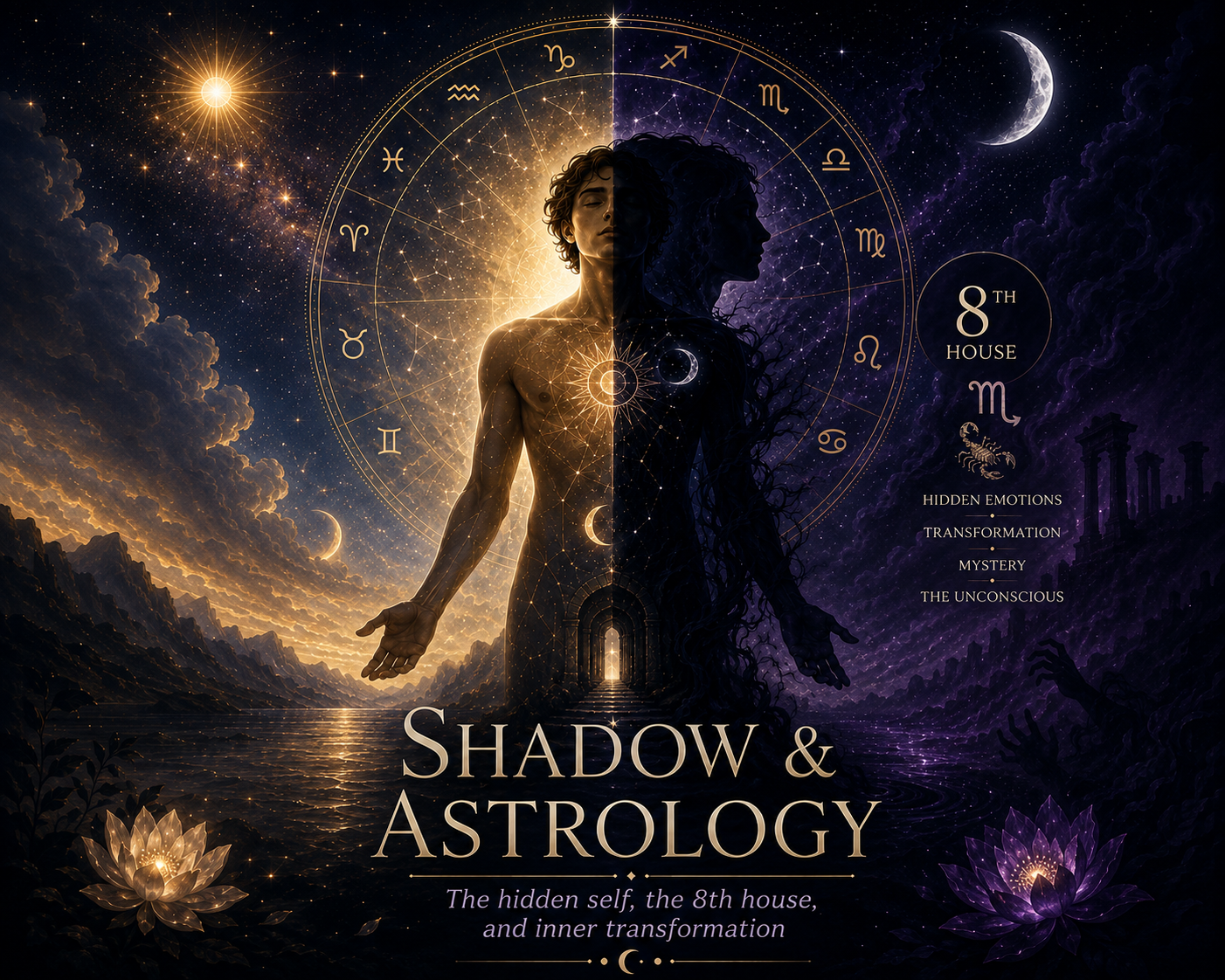
The 8th House: The Shadow Within – A Journey into the Hidden Self "The greatest battle in life is not against...

Birth Chart Consultation: Discover the Deeper Meaning of Your Kundali Every individual is born with a unique combination of planetary energies....

Gemstones and Divinity : Ancient Wisdom, Planetary Connections and Vedic Astrology Gemstones and their relation with destiny have remained fascinating among...

Vedic jyotish, as the name suggests, has a connection with the Vedas or the Vedic period, which is also called...

Your rising sign, also known as the ascendant, is the zodiac sign that was ascending on the eastern horizon at...

The astrological chart is divided into twelve houses, each representing a different sphere of life—from personal identity and relationships to...

Mercury retrograde is one of the most well-known astrological phenomena, often associated with miscommunication, technology glitches, and travel disruptions. During...

Astrology, an ancient practice rooted in the observation of celestial patterns, offers a fascinating lens through which we can better...

Astrology offers a fascinating lens through which to explore human personality and relationships. Each zodiac sign carries distinct traits that...

While the sun sign often takes center stage, the moon's influence in astrology is profound and deeply personal. The moon...